There is a minute on every trip when the plan brushes up versus fact. The weather slides in early. A partner turns an ankle on a scree traverse. The cooktop flares, and someone gets hold of the pot with damp, blistering fingers. In those beats between injury and end result, excellent first aid turns panic into a strategy. The skill does not replace reasoning, navigating, or fitness. It lets you get time and make audio selections when the nearest facility is a trailhead miles away.
This overview blends field-tested strategies with the structure of modern first aid training. It is not a substitute for a hands-on first aid course or a CPR course, yet it will certainly direct you toward what issues most when the wilderness adds time and range between you and expert care.
The wild difference
Urban initial -responders procedure arrival times in minutes. In the backcountry, the clock behaves in different ways. A five-mile carry-out on busted https://blogfreely.net/albiusoyjd/white-card-online-training-made-easy-obtain-certified-today terrain with a light rainfall and low morale can extend to four hours. Your choices must make up delayed evacuation, limited materials, and direct exposure. The leading priority changes from fast transport to supporting breathing, flow, and heat, after that choosing whether to push on, develop shelter, or signal for help.
Good first aid in remote locations leans on clear reasoning and simple interventions that collaborate with scarce resources. Tape becomes splinting material, a puffy coat comes to be an improvisated cervical collar, and tidy water you were saving for dinner ends up being the difference in between an infected injury and a clean one. This state of mind comes alive in useful first aid courses that stress improvisation and scene management, not simply book lists.
Build a package you in fact understand just how to use
The sleek, shrink-wrapped package at the equipment shop looks assuring. Frequently, it conceals 3 rolls of gauze and a solitary adhesive bandage under a plastic whistle. Build your set around most likely troubles for your trip size, team size, and environment, after that freshen it after each outing.
For weekend hikes in warm climates, a little kit with finger splint, a number of sizes of adhesive bandages, a roll of cohesive wrap, triangular bandage, sterilized gauze pads, antibiotic ointment, sore therapy, tweezers, tape, dental rehydration salts, advil, acetaminophen, loperamide, antihistamine, and a pair of medical handwear covers covers a shocking array. Include an epinephrine auto-injector if you or a partner has actually known extreme allergies. For towering or desert paths, include additional blister care, a SAM splint, an injury watering syringe, and much more gauze. River trips necessitate a more robust package due to the fact that emptying is more complex, and moisture spoils packaging.
Skill matters greater than inventory. Practice taping an ankle joint, watering an injury with a syringe, and applying a pressure clothing till it feels typical. An evening in the house is the moment to find out exactly how to open a mylar blanket or fit a tourniquet, not on a windy ridge with headlamps dying.
Stop, look, listen: scene size-up and very first moves
When something fails, take three slow-moving breaths while you check for threats. Gliding rocks, dropping limbs, unstable snow, or a flaring stove can transform a solitary casualty right into numerous. Move the team and the patient to a much safer place if you can. After that HLTAID011 First Aid Course Gold Coast call out to the injured person. If they respond to plainly, you already understand 2 crucial things: they are taking a breath and have a pulse.
The key assessment runs in a straightforward rhythm you will certainly exercise in any solid first aid and CPR course. Check responsiveness and air passage. Look, listen, and really feel for breathing. If breathing is missing or unusual and you are trained in CPR, start compressions and send out someone for help. For backcountry saves, the decision to perform CPR is nuanced. If the arrest is witnessed, as a result of sinking or lightning, and you can start within a number of minutes, CPR may be lifesaving. If the arrest is unwitnessed and you are hours from definitive treatment, results are bad. This is why a CPR refresher course that deals with exterior circumstances is worth the moment. It gives you reasoning, not simply steps.
If breathing proceeds, turn to blood loss. Arterial blood loss is bright and quick, venous is darker and consistent, capillary oozes. Apply straight stress with gauze or a clean cloth and keep it without looking. If the dressing soaks via, add much more ahead. Tourniquets have a place for serious arm or leg bleeding when stress fails. Place high and limited on the arm or leg, keep in mind the moment, and do not remove it in the field unless you have advanced training and a clear reason. Improvised tourniquets rarely function unless constructed with a vast strap and a solid windlass. A real industrial tourniquet weighs little and can conserve a life. It belongs in group sets for climbing, chainsaw work at camp, or bikepacking on rough terrain.

Once you have bleeding regulated and breathing guaranteed, address circulation in a broader sense: shock. In the outdoors, shock usually originates from blood loss, dehydration, anaphylaxis, or blood poisoning from postponed wound treatment. Lay the person level preferably, boost legs a little unless there is a believed pelvic, spinal, or reduced arm or leg injury, and keep them warm. Heat is not an afterthought. Also light hypothermia gets worse bleeding and alters mental condition, which complicates everything else.
Airway and breathing in the wild
Airway concerns are unusual yet crucial. An aware client who can talk has a patent air passage. If they are unresponsive and breathing, position them on their side with the head slightly back to keep the tongue clear and enable vomit to drain pipes. Snow, sand, and leaves complicate this, but little changes like a rolled coat under the back, a pack as a wedge, and a small trench for the mouth can make it work.
Breathing troubles in the backcountry typically come from asthma, allergic reactions, chest trauma from drops, or high elevation. A hissing hiker that left their inhaler in the cars and truck is an avoidable tale. Motivate journeys to consist of repetitive inhalers in the group kit. For anaphylaxis, an epinephrine auto-injector need to be made use of when there is respiratory tract participation, breathing difficulty, or substantial flow signs and symptoms like wooziness or fainting together with hives or swelling. After epinephrine, antihistamines can help with skin signs however do not replace epinephrine for the serious components. Prepare for discharge also if the person enhances, because rebound responses happen.
Chest injuries come as bruised ribs or, rarely, penetrating trauma from branches or falls onto sharp rock. Unpleasant but steady rib injuries heal with time and rest. Support with a breast cover just if discomfort seriously restricts breathing, and screen to stay clear of extremely tight wraps that restrict upper body growth. For open upper body wounds, seal three sides to produce a flutter valve effect, or utilize a vented upper body seal from your kit if you bring one. This is a sophisticated scenario for many hikers, however not as uncommon for arborists, hunters, or off-trail scramblers.
Head injuries and making the phone call on concussions
On tracks, head injuries normally originate from slides, bike crashes, or rockfall. Loss of consciousness even for a couple of seconds is entitled to focus. Complication, https://edgarcple924.bearsfanteamshop.com/how-to-get-your-first-aid-certificate-online-a-step-by-step-overview memory voids, headache, nausea or vomiting, sensitivity to light or sound, and balance concerns recommend blast. In the city, the advice is rest and observation with simple access to care. In the backcountry, the choice is whether to stop, construct sanctuary, and screen, or to evacuate immediately.
Persistent vomiting, intensifying headache, drowsiness that is difficult to wake, one student larger than the other, seizures, or weak point on one side point toward serious mind injury, and you must relocate to evacuate as quickly as it is safe. If the client maintains yet remains clouded, lessen exertion, keep stimuli reduced, and strategy leave within 24-hour. Safety helmets are not a magic bullet, but they interrupt a lot of negative stories before they begin. I have seen a foam helmet broken through after an easy creek crossing loss. The walker went out with a frustration, not a medevac.
Wounds, burns, and infection in gritty environments
Dirt is the opponent. The difference between a tidy injury and an infected one often comes down to 10 extra mins with tidy water and a syringe. Cut clothes around the wound as opposed to drawing fabric over it. Get rid of ingrained grit with pressurized watering. You can make a serviceable irrigator by filling a 10 to 20 milliliter syringe and pushing hard, or piercing a little opening in a water bottle cap to develop a jet. Aim for sufficient quantity that the water runs clear, typically a few hundred milliliters for small lacerations and considerably more for bigger, contaminated injuries. If you need to utilize a stream, pick clear, rapid water and maintain your products as clean as possible.
Close just tiny, clean cuts with glue strips or skin glue. Leave punctures and dirty wounds open up to drain, after that cover with sterile gauze and a breathable wrap. Adjustment dressings daily, or earlier if damp or unclean. Indicators of infection include increasing soreness, heat, swelling, pain, red streaks expanding from the injury, and fever. On remote trips with multi-day leaves, bring a basic antibiotic if you have training and a prescription plan from a medical professional. Even after that, great cleaning is typically extra effective than pills.
Burns at camp are surprisingly usual. Boiling water on revealed skin and heavy steam burns from lids are much more frequent than stunning fire injuries. Trendy the shed promptly with clean, amazing water for at the very least ten mins. Do not use ice, butter, or toothpaste, despite the myths that linger around picnic tables. Delicately eliminate rings and watches before swelling begins. Cover with a clean and sterile, non-adherent clothing. For larger burns, cover freely to avoid fluid loss and maintain warmth for the rest of the body. Burns over joints tense quickly, so motivate mild activity after the discomfort eases, and display for indications of infection. Any type of circumferential burn around an arm or leg, or burns involving the face, hands, feet, genital areas, or major joints are worthy of prompt evacuation.
Sprains, fractures, and the fine art of walking out
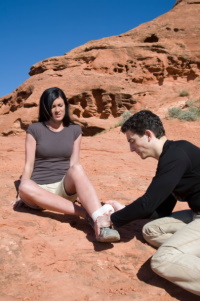
Twisted ankle joints can finish journeys or wreck seasons if dealt with severely. The rule of thumb I utilize after years directing trail staffs is this: if the individual can birth weight after the initial acute pain subsides, also gingerly, you are most likely taking a look at a sprain. Rest briefly, compress with a flexible cover, boost when stationary, and cool down the area with water-soaked towels. Insulation prior to the following day's hike aids. If birthing weight is difficult, or if there shows up defect, considerable bone inflammation, or a sense of grinding, treat as a fracture.

A SAM splint and two bandages can transform an arm or leg from agony to tolerable. Pad pressure points with garments, immobilize the joint over and listed below the injury, and safeguard with covers or tape. Reconsider blood circulation, sensation, and motion beyond the splint after you secure it. If toes or fingers expand cold, numb, or blue, loosen and adjust. On steep terrain, occasionally the best relocation is to support, construct shelter, and await aid instead of take the chance of a fall during a self-evacuation. This is where journey plans and communication tools pay off.
Heat, cool, and altitude: the slow-burn emergencies
These conditions unfold over hours, not minutes. They creep previous individuals that really feel great up until they do not.
Heat fatigue turns up as hefty sweating, weak point, nausea or vomiting, migraine, and in some cases pains. Relocate to shade, loosen clothes, and begin energetic air conditioning with wet bandannas, fanning, and great liquids with electrolytes. The majority of hikers have actually been near this state without understanding it. Heat stroke is different and lethal. When the body sheds the ability to cool, core temperature soars, mental condition modifications, and sweating might quit. Quick cooling becomes the leading concern. Splash with water, immerse in a creek if risk-free, location ice packs in the armpits and groin, and evacuate as soon as possible. Do not delay cooling down to start a walk out.
Hypothermia is not simply a wintertime issue. A gusty top in damp clothes can go down a person right into moderate hypothermia even at 50 degrees Fahrenheit. The early indications look like the journey catching up with a person: shivering, slurred speech, clumsiness. Include calories, eliminate wet layers, add insulation and a windproof covering, and produce a warm catch with a mylar blanket and sleeping bag. In moderate cases, warm wonderful beverages assist. Serious hypothermia, with reducing heart beat, minimized awareness, and in some cases paradoxical calmness, requires gentle handling. Rough motion can precipitate hazardous heart rhythms. Insulate from the ground, include warm packs to the armpits and groin, and concentrate on passive rewarming while you organize evacuation.
Altitude health problem begins as a bothersome migraine, poor sleep, anorexia nervosa, and mild nausea for those that ascend swiftly over 8,000 feet. The treatment is timeless: do not go higher up until signs boost, rest, hydrate, and consider acetazolamide per a plan made with your medical professional. Serious types include high-altitude cerebral edema and high-altitude pulmonary edema, which provide with intensifying headache, confusion, ataxia in the very first situation, and lack of breath at rest and a cough in the 2nd. The treatment is descent. Oxygen and medications may assist, but relocating down is the treatment that changes end results. I have seen happy travel plans collapse beautifully for an early descent, and those trips commonly wind up as the very best tales due to the fact that everyone returned healthy.
Navigation of choices: when to stay, when to go
Field first aid is a chain of reasoning telephone calls. You are always balancing threat currently versus risk later. Staying put conserves power, maintains the team together, and enables the injured person to recover while you maintain them. Moving protects against nightfall from capturing you, shuts the space to a trailhead, and reduces emptying time if the problem aggravates. The right selection relies on surface, weather, daytime, group ability, and the injury itself.
A simple framework assists. If the client is unsteady or weakening regardless of great care, begin discharge promptly. If they are stable, suffering yet enhancing, and the route in advance is secure, a slow-moving walk-out might be best. If terrain is dangerous, weather is transforming, or you can not move without high threat, sanctuary in place and call for help. Always calibrate these options with real times and distances. Hopes and maps are not replacements for ground fact. In the canyonlands, I have seen parties ignore the initiative of a mile up dry pour-offs by a factor of 3. The hurt experience twice in those mistakes.
Communication and the contemporary safety and security net
It is a gift to live in a time when a little satellite tool can send out an SOS from a lonesome ridge. That does not discharge you from judgement. It broadens your choices. On group journeys, designate a key communicator who lugs the gadget and a backup who understands the login and settings. Practice sending a check-in message, sharing collaborates, and terminating a dud. Pack extra batteries or a power bank, and keep the tool warm in cold weather to protect life.
When you call for assistance, concise information speeds the best response. Provide your area in collaborates and a short description of the surface. Describe the person's problem using basic words: mindful, breathing, managed bleeding, thought fracture of left ankle joint, can not birth weight. Keep in mind weather condition, visibility, and touchdown areas if you can see possible helicopter sites. If you discovered this design of handover in a first aid training, it will really feel natural when the risks rise.
Hygiene and little problems that ruin trips
Foot treatment protects against a great deal of torment. Hot spots are worthy of instant attention. Stop, completely dry the skin, use a dressing or tape with a donut of moleskin to offload stress, and adjust socks or laces. Sores that are small and intact can be laid off with protective clothing. Larger, strained sores take advantage of tidy drain at the side, leaving the roof undamaged as a natural plaster, then covering with a breathable dressing.
Diarrhea is not just an annoyance. It dries out, saps morale, and sets up electrolyte imbalances. Dental rehydration salts and constant sips can turn the trend, and loperamide can slow transportation for non-bloody looseness of the bowels when a lavatory is not an option. Boil, filter, or deal with water accurately. Hand hygiene at camp is not optional. A small bottle of alcohol gel has actually rescued lots of journeys. In desert environments, the dust can irritate eyes and call lens users do badly. Think about glasses on dusty courses and carry saline for rinsing.
Training that sticks
Skill fades without technique. A brief city class can show you how to put hands for compressions and exactly how deep to push, however outdoor environments require more. Try to find first aid courses that stress wilderness decision-making and improvisation. Carriers that focus on first aid and CPR courses usually supply wild modules or training courses especially designed for multi-hour discharges and environmental injuries. If you have a team that climbs up, splits right into subgroups, or leads youth trips, prepare a custom-made first aid and CPR course so the training mirrors your actual dangers and equipment.
An excellent program consists of situations where you handle a simulated scene with restricted equipment, practice CPR in limited spaces, and hand over a client to a mock rescue team. The stress vaccination you get from listening to a liked one's voice saying I feel lightheaded in a technique setup is worth more than a laminated card. That said, keeping a current first aid certificate, particularly with a component that consists of CPR training, does matter. Several groups established a CPR refresher course on a yearly or semiannual tempo. The rep maintains the actions and the reasoning sharp.
Two field-ready checklists
- Rapid key analysis in the area: Safety look for you and the group Response, respiratory tract, breathing Severe blood loss control, tourniquet if needed Shock prevention, maintain warm Decide: deal with and keep an eye on, move, or ask for help Pocket materials that punch over their weight: Elastic cover, cohesive bandage, and a couple of gauze pads Blister set with tape and moleskin Antihistamine and painkiller in small vials Tweezers, mini shears, and nitrile gloves Electrolyte packets and a mylar blanket
These checklists are not exhaustive. They address repeating issues without weighing down your pack.
Real situations, real trade-offs
On a rainy afternoon in the Victorian Alps, a friend slipped going across a damp rock slab and drove a knee into a ledge. Discomfort increased, after that reduced to a dull throb, but weight bearing really felt wobbly. We were five kilometers from camp, with a slim climate home window. We taped the knee in a figure-eight with flexible cover, unloaded pack weight to others, and relocated gradually. At camp, swelling had actually climbed up and expansion felt locked. We selected a day of rest and then a brief exit rather than the prepared ridge loophole. An MRI weeks later revealed a bone swelling, no tear. The same system can have easily been a lens injury. The telephone call was not regarding diagnosis perfection. It depended upon function and threat on damp rock.
A different day, a young walker established hives and throat rigidity minutes after a wasp sting. The epinephrine auto-injector transformed a fast slide right into steady breathing within 2 mins. We monitored, gave an antihistamine, and arranged a pickup at the nearest fire roadway. Four hours later, mild symptoms returned, and we were happy we had relocated more detailed to help. In training, the distinction in between first aid and first aid pro frequently comes down to exactly how it feels when your hands drink and you do the best thing anyway.
Planning for prevention
Risk decrease begins before you shoulder your pack. Suit courses to the least experienced participant, not the most excited. Share medical worries in the pre-trip rundown in a matter-of-fact method. Two minutes of discomfort on the front end beats a surprise asthma attack at 9,000 feet without an inhaler. Condition your legs and feet for descents, not just climbs up. Many ankle joint injuries take place when people are worn out and headed down. Inspect weather condition two times, as soon as in the house and once at the trailhead, and bring insulation even when the projection looks friendly. The added layer you virtually left in the auto earns its keep when somebody rests still for an hour while you tape an ankle.
Map your bailouts on the drive, when you can see your course on satellite imagery. Note creek crossings, roads that come near the trail, and open fields. If somebody sprains a knee at mile eight, you will certainly have currently searched for alternatives apart from backtracking the full 8. Share the strategy with a get in touch with in the house including return times, course variants, and the version of your interaction tool. Responsible journeys look boring on paper. That is the point.
Where to go next
If this subject is brand-new, begin with a foundational first aid and CPR course from a credible supplier. Ensure the curriculum consists of hemorrhaging control, respiratory tract management, shock, ecological direct exposure, and decision-making for postponed treatment. If you already have a first aid certificate, schedule a CPR refresher course and seek a wilderness-oriented upgrade that pushes you right into reasonable situations. The hours you spend will certainly echo in quiet self-confidence the next time a person states I think I need to sit down and you look past words to what their hands and shade are informing you.
The outdoors will keep providing shocks. Some will be the great kind, like a temperature inversion at dawn or a herd of elk ghosting with haze. Some will be the kind that check your calm. With sound training, a package you recognize intimately, and a routine of consistent choices, you will carry devices that matter when the distance expands long in between you and help.